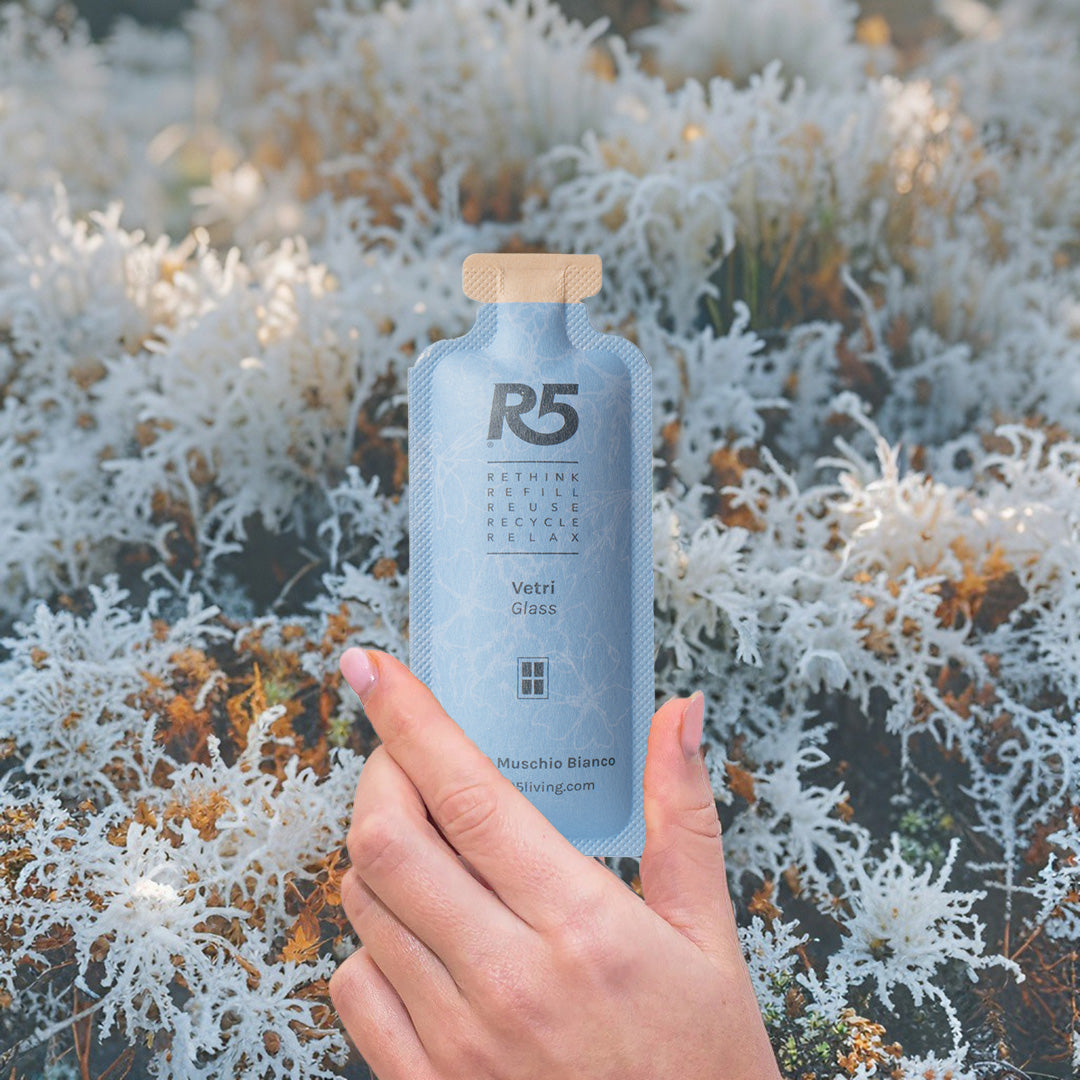
Glass cleaner Refill
Regular price
€5,90 EUR
Regular price
Sale price
€5,90 EUR
Unit price
per
They're talking about us
★
★
★
★
★
More than 30,000 satisfied customers
Glass cleaner refill: streak-free windows and mirrors instantly. Refill the bottle instead of throwing it away
Frequently Asked Questions
Questions? We have the answers!
Our refills are formulated with 100% plant-based surfactants, produced by certified European suppliers. One of the surfactants is RSPO Mass Balance certified (Roundtable on Sustainable Palm Oil), ensuring a controlled supply chain. The raw material supplier is certified according to the RSPO Supply Chain Certification standard (ICEA certificate no. 19/2024). The other surfactant is produced in France using an innovative process that makes use of cereal industry waste (wheat bran and straw). Its raw materials are approved according to the COSMOS v4 standard by the Ecocert Greenlife certification body (certificate no. 115511). The ingredient contains no petrochemical components or non-natural ingredients.
Nickel is a metal that can be present in trace amounts in many commonly used products, including cosmetics, detergents, and food. It is one of the most common causes of allergic contact dermatitis (around 10-15% of the European population is sensitive to nickel). To meet the needs of nickel-sensitive people, we subject some of our products to a specific analytical test to determine the nickel content. How the test was conducted: Method: ICP-MS (Inductively Coupled Plasma Mass Spectrometry) Reference standard: EPA 6020B:2014 Laboratory: Innovhub SSI (Milan) — independent external laboratory Limit of quantification (LOQ): 0.1 mg/kg What does the result "< 0.1 mg/kg" mean (equal to <0.1 ppm)? The reported value indicates that any nickel present in the product is below the instrument's limit of quantification (0.1 mg/kg, equal to 0.1 parts per million). ICP-MS is the most sensitive analytical technique available for determining trace metals. Technical note: there is currently no specific legal limit for nickel in detergents (EC Reg. 648/2004) or cosmetics (EC Reg. 1223/2009, Annex III) in Europe, but dermatological literature and nickel-sensitivity associations indicate guideline thresholds between 1 and 5 mg/kg for safe products. The value found in our tested products is 10 to 50 times lower than these thresholds. The full test report is available upon request
The refills are formulated and produced in Italy along a supply chain of partners selected according to our ISO-certified quality system (ISO 9001 and ISO 14001)
No. You can use any 750ml spray bottle you already have at home, provided it is clean and rinsed, following the proportions indicated on the pouch
Each refill measures 5x13 cm and is less than 1 cm thick. The box containing two refills measures 5.5x13.2x3.5 cm. This makes it easy to keep a supply on hand and never run out: it takes up much less space than classic plastic bottles
The empty refill should be disposed of with paper waste.
Yes, our refill packaging is made of FSC-certified paper and is recyclable with paper. We explain in detail how it is made, because transparency about materials is a core value for us. The outer box is made of 400 g/m² kraft-back cardboard, FSC Mix certified (license number CQ-COC-000075). It is 100% paper and should be disposed of with paper waste. The refill pouch: it is technically the most delicate component, because it must contain a liquid product without leaking. It consists of: FSC-certified thermoformable paper (license CQ-COC-000208), PE/EVOH/PE barrier film: solvent-free adhesive. The thin, transparent inner barrier film is essential: without it, the paper would absorb the liquid and the pouch would not hold. We chose the solution that minimized this layer, keeping 80% of the total weight in paper. The pouch is recyclable with paper, as certified by Aticelca Level C — the Italian reference body for recyclability in the paper collection stream. How to dispose of the packaging correctly Box → paper waste Refill pouch → paper waste Always follow your municipality's waste separation guidelines, which may vary slightly.
For optimal results, we recommend spraying a small amount of product and wiping with a clean cloth made of cotton, bamboo fiber, or natural cellulose. Avoid using too much detergent and, if the glass is very dirty, perform a second pass with a dry cloth. Always remember to remove dust from the glass before you start cleaning. To reduce the release of microplastics into the environment, we prefer to recommend cloths made of natural fibers rather than synthetic microfiber. Finally, if possible, avoid cleaning the glass when it is exposed to direct sunlight: the product could dry too quickly and promote the formation of streaks.